
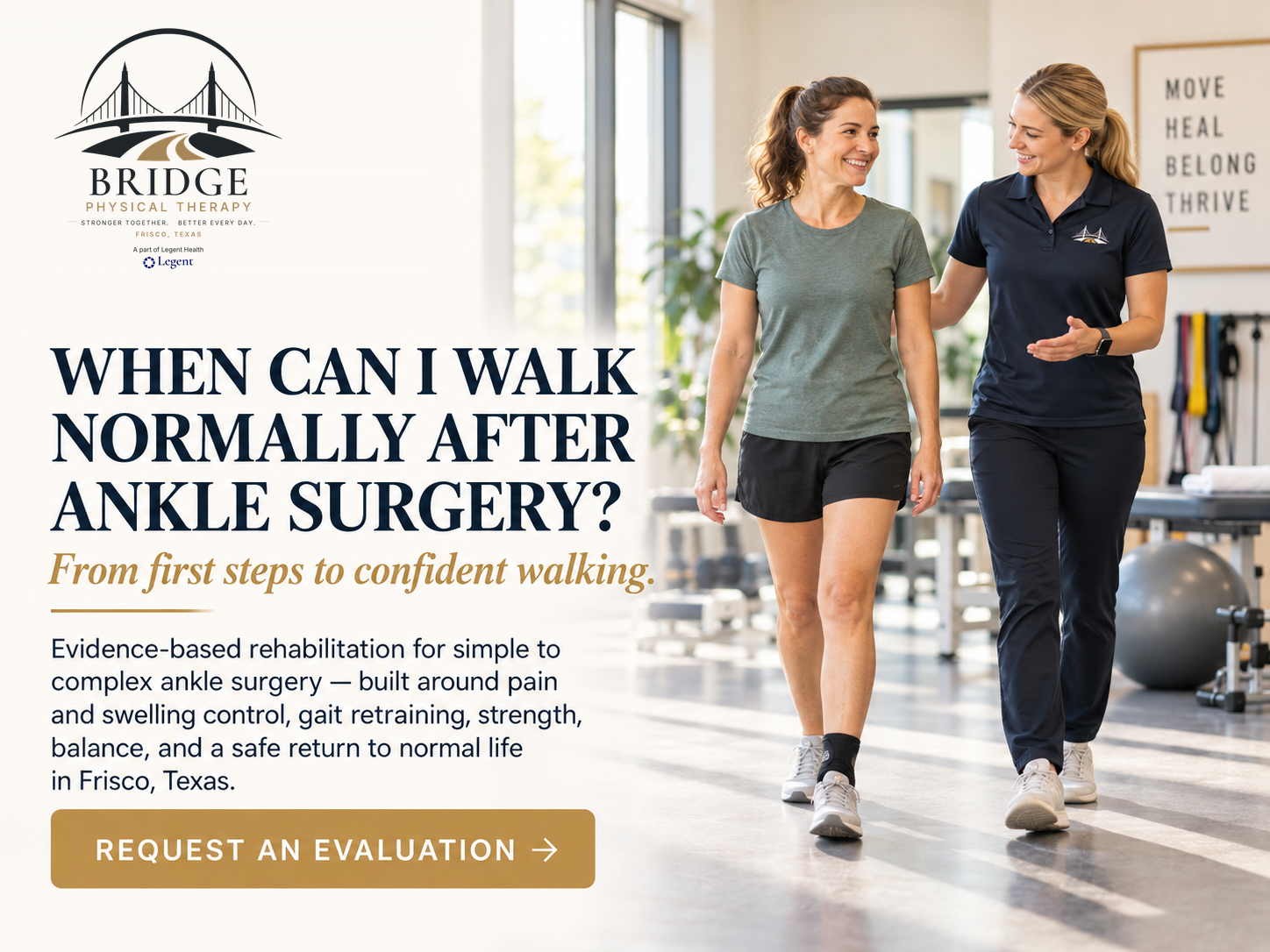
“When can I walk normally after ankle surgery?” is one of the most important questions patients ask. The answer depends on what was repaired, how the tissues are healing, and what “normal” walking means for that person. Walking in a protective boot is not the same as walking in a shoe. Walking without crutches is not the same as taking an even stride. Being allowed to bear weight does not necessarily mean the ankle is ready for full push-off, hills, stairs, or long days on your feet.
At Bridge Physical Therapy in Frisco, Texas, the goal is to help patients move through those milestones safely. Whether the procedure is relatively straightforward or a complex reconstruction, rehabilitation should address swelling, mobility, strength, balance, endurance, and gait mechanics—not simply the date a boot comes off. There is no universal countdown, but there is a structured way forward.
Three Different Milestones: Weight Bearing, Independent Walking, and Normal Gait
First comes weight-bearing permission: the surgeon decides how much load the repaired bone, tendon, ligament, or implant can tolerate. This may range from no weight bearing to immediate walking in a protected device. Second comes independent walking: transitioning from a walker or crutches to a boot, then a supportive shoe as permitted. Third comes normal gait: walking at a comfortable speed without a pronounced limp, with appropriate step length, balance, and push-off.
The three milestones often occur weeks apart. It is entirely possible to have minimal pain yet still limp because the calf remains weak, the ankle is stiff, or the brain is guarding the leg. Physical therapy is especially useful at this stage: permission to walk is the starting point for gait restoration, not the endpoint.
Why the Operation Determines the Walking Timeline
Forefoot and less complex procedures. Some bunion or forefoot operations allow early protected walking in a surgical shoe. Others involve bone healing or soft-tissue repairs that need more limitation. “Foot surgery” alone is not enough information to predict the timeline.
Ankle arthroscopy and ligament surgery. A limited arthroscopic debridement can follow a different pathway from cartilage restoration or ligament reconstruction. If the procedure involved microfracture, grafting, or substantial soft-tissue reconstruction, loading may be restricted longer despite small incisions.
Ankle fracture fixation (ORIF). After stable fixation, some patients can begin weight bearing sooner than traditionally advised. However, injury complexity, syndesmotic stabilization, fixation quality, wounds, and the treating surgeon’s instructions still control the plan. A person with an uncomplicated fracture should not borrow the protocol of someone with extensive bone or soft-tissue damage.
Achilles tendon repair. Modern functional protocols may permit protected loading relatively early, usually with controlled ankle position in a boot. But walking in the boot is not permission for aggressive calf stretching or resisted push-off. Tendon elongation and loss of plantarflexion strength can undermine recovery if progression is too aggressive.
Total ankle replacement or ankle fusion. These operations are performed for advanced joint disease, but they do not restore walking by the same mechanism. Replacement seeks to preserve ankle motion; fusion eliminates movement across the fused joint in exchange for stability and pain relief. Both may improve walking, yet their gait mechanics and rehabilitation priorities differ.
Complex reconstruction and limb salvage. Revision surgery, deformity correction, Charcot reconstruction, staged procedures, external fixation, and compromised soft tissues may require substantially longer protection and individualized loading. For these patients, steady, safe progress often matters more than matching someone else’s recovery date.
What Does the Evidence Say About Early Weight Bearing?
The evidence supporting earlier loading after selected ankle fracture operations is stronger than many patients realize. In the 2024 multicenter WAX randomized trial, beginning weight bearing at approximately two weeks after fracture fixation was noninferior to delayed weight bearing at six weeks on the primary functional outcome. An earlier randomized trial by Dehghan and colleagues also evaluated earlier loading and range of motion after fixation of unstable ankle fractures. These studies support careful consideration of early mobilization in appropriate patients; they do not establish that all ankle operations can be loaded immediately.
Achilles studies reinforce the same larger lesson: immobilization is not always the only safe approach. A meta-analysis of randomized trials after Achilles repair found early functional rehabilitation acceptable in studied populations, with differences depending on protocol. But an Achilles tendon, a fracture plate, an ankle replacement, and a fusion construct are not interchangeable. The surgeon should define restrictions, while PT works within them.
Research on formal outpatient PT also deserves nuance. A 2023 systematic review after ankle fracture surgery did not find a consistent overall functional advantage of supervised physiotherapy compared with instructions alone across the limited available studies. The clinical implication is to match supervision to the individual: persistent limp, reduced motion, weakness, poor balance, fear of loading, complex surgery, or difficulty progressing can make targeted PT especially valuable.
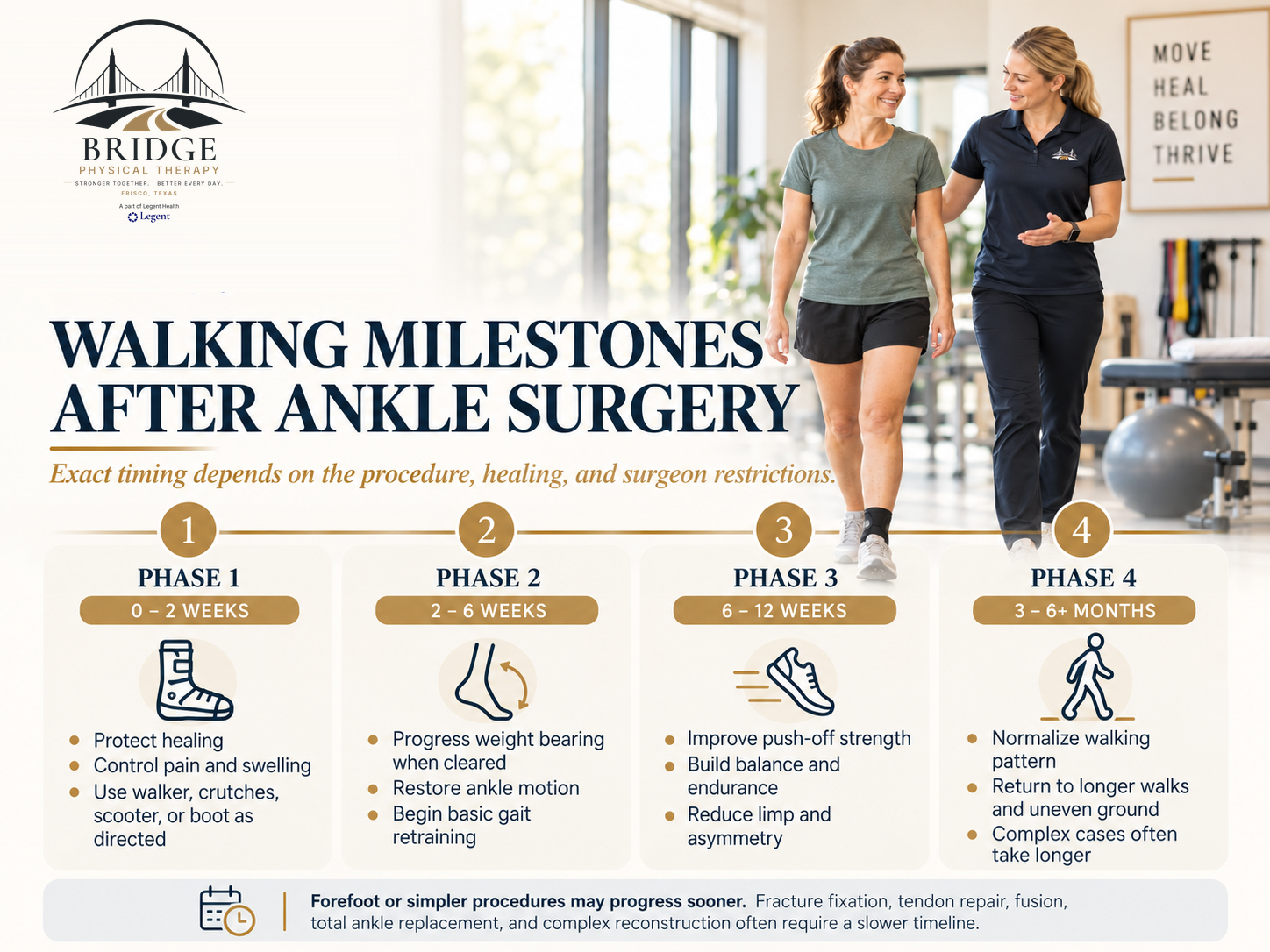
Walking Milestones After Ankle Surgery: A Framework, Not a Deadline
Early protection: Depending on the procedure, the initial days and weeks may focus on wound protection, edema control, safe transfers, appropriate assistive devices, and circulation or mobility exercises that do not violate restrictions. Some procedures allow walking immediately; others do not.
Progressive loading: Once cleared, patients begin increasing time on the operative leg. The goals are controlled weight acceptance, a more symmetrical stride, smoother transitions from devices, and progressively better motion in the joints that should move.
Strength and gait retraining: As healing permits, PT can emphasize calf capacity, foot and ankle control, step-down mechanics, balance, and walking endurance. For many patients, this is where the visible limp starts to diminish.
Return to more demanding walking: Longer distances, irregular ground, travel, hills, recreational walking, and higher-level sport require greater tolerance. More complex operations often continue to improve well beyond the first few months. The illustration below is a simplified orientation only; it must never override the operative plan.
Why Does Walking Still Feel Wrong After the Pain Gets Better?
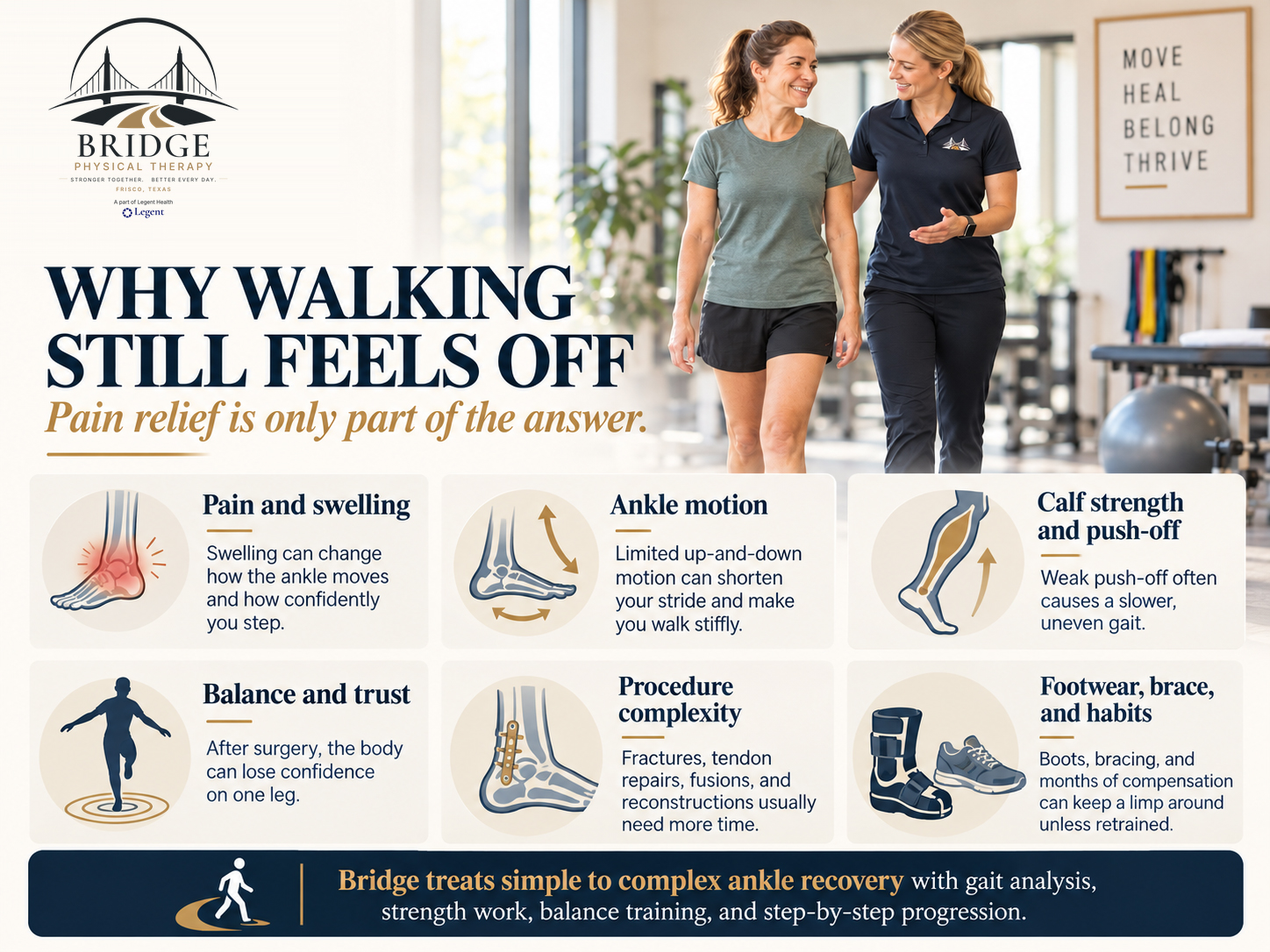
An ankle can be healing well while gait still looks abnormal. Swelling changes how the joint moves and how confident the leg feels under load. Limited dorsiflexion—the motion needed to bring the shin over the foot—can shorten the step and promote an early heel rise. Calf weakness limits the push-off that propels the body forward. Reduced balance and proprioception create hesitation on one leg, especially on uneven ground.
Boots, crutches, and weeks of protective walking also establish habits. Patients may continue turning the foot outward, taking shortened steps, leaning the trunk, or favoring the opposite leg after those compensations are no longer necessary. Rehabilitation addresses the specific cause rather than telling the patient to “just walk normally.”
After fusion, the target is a comfortable, efficient walking pattern that respects the absence of motion at the fused joint—not forcing motion that the operation intentionally removed. After ankle replacement, PT may focus on restoring useful movement and control without exceeding the surgeon’s implant-specific precautions.
What Should Your Physical Therapist Measure?
Progress should be observable. At Bridge, a useful ankle rehabilitation evaluation may include swelling, wound or boot status, ankle and foot motion when permitted, calf and proximal-leg strength, balance, step length, walking speed, stair quality, and endurance. Measures such as the timed 10-meter walk, six-minute walk test, single-leg stance, and patient-reported function can help track meaningful change when clinically appropriate.
The right metric varies by operation and phase. A patient recovering from tendon repair may not be ready for single-leg heel raises, while someone who underwent arthroscopy may already be training higher-level balance. A complex limb-salvage patient may first need to safely negotiate transfers and short distances with the correct device. Sophisticated rehabilitation is not one test for everyone; it is matching the test to the task.
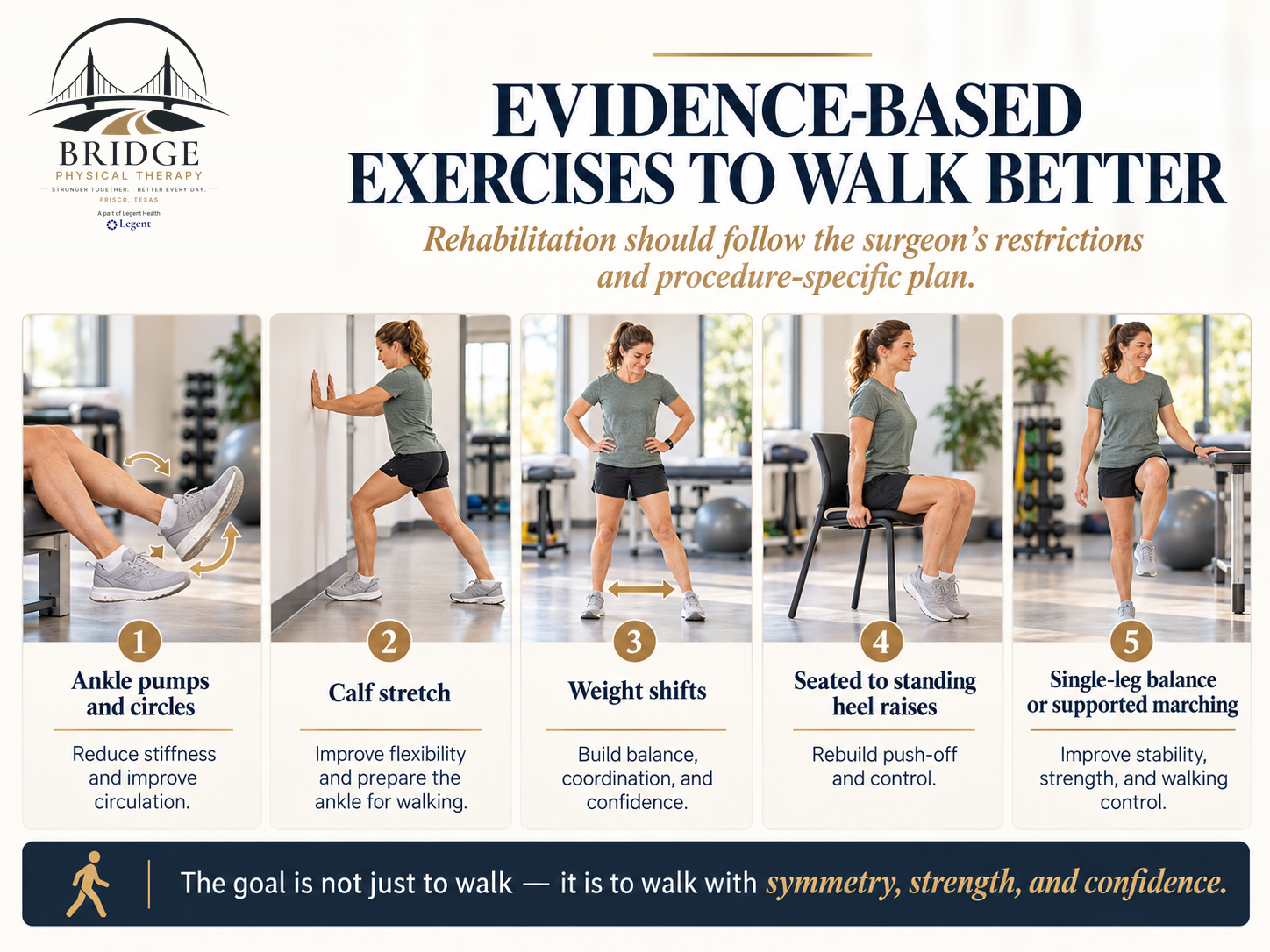
Evidence-Informed Exercises That Help Restore a Better Walking Pattern
- Ankle pumps and gentle circles. When the operative plan permits motion, light movement can help address stiffness and encourage comfort. These are not appropriate across an immobilized tendon or protected reconstruction until the surgeon clears them.
- Calf flexibility or controlled ankle motion. Limited dorsiflexion can alter stride mechanics. A therapist may use safe mobilization or stretching in selected cases, but aggressive Achilles stretching after tendon repair can be harmful and should never be treated as a universal exercise.
- Weight shifts and supported loading. As weight bearing is authorized, controlled shifts between legs retrain confidence and reduce avoidance of the operative side.
- Heel-raise progressions and functional strengthening. Calf strength matters for push-off. Depending on the operation, this can progress from gentle bilateral loading toward more demanding tasks over time. Exercise timing is individualized, especially after Achilles reconstruction, arthrodesis, or major bone surgery.
- Balance, step training, and walking practice. Supported marching, tandem stance, step-ups, and eventually single-leg control may address instability and the uneven stride patients notice. Exercises should become more functional only as healing and movement quality allow.
A home program can be helpful, but repetition alone is not the treatment. Dose, technique, progression, and symptoms determine whether exercise is building capacity or simply causing swelling and irritation.
Can Advanced Gait-Training Technology Help?
Rehabilitation sometimes uses body-weight-supported treadmills, which partially unload the legs while a person practices walking. This approach can be considered in selected orthopedic or neurologic programs when the equipment is available and the patient is appropriate for it. A 2025 systematic review reported promising findings for several mobility outcomes, although studies included varied conditions and protocols and the results should not be extrapolated as a guarantee after ankle surgery.
The more important principle is measured, progressive loading. Whether walking practice uses a hallway, parallel bars, assistive devices, or specialized equipment, therapists still have to evaluate step symmetry, tolerance, pain, push-off, and balance. Technology is a tool—not a substitute for surgical clearance or clinical judgment.
When Should You Call the Surgeon Instead of Pushing Through?
Contact the surgical team about worsening incision redness or drainage, fever, sudden or escalating pain, new deformity, loss of previously regained function, or an abrupt change in sensation or circulation. New calf swelling or pain deserves prompt medical assessment. Chest pain, shortness of breath, or signs of a medical emergency require urgent emergency evaluation. PT should not treat these findings as an ordinary training setback.
Normal rehabilitation may involve transient soreness or swelling with increased activity. But a persistent upward trend in swelling, an increasingly pronounced limp, or symptoms that do not settle between sessions should prompt modification of loading and, when indicated, surgeon communication.
From Simple Procedures to Complex Reconstruction: Bridge PT in Frisco
Bridge Physical Therapy’s role is to translate the surgeon’s plan into better daily function. For one patient, the goal is to leave a surgical shoe behind and walk comfortably to work. For another, it may be navigating stairs after fracture fixation. For someone recovering from ankle replacement, fusion, or substantial reconstruction, the first meaningful victory may be a safe, symmetrical walk across the room.
Progress is not defined by how quickly the calendar moves. It is defined by safer loading, better gait mechanics, stronger support muscles, greater endurance, and growing confidence. If you are recovering from ankle or foot surgery in Frisco or the greater Dallas-Fort Worth area, request an evaluation to build a plan around your procedure, restrictions, and goals.
Frequently Asked Questions
How soon can I walk after ankle surgery?
Some procedures permit immediate protected weight bearing; others require several weeks or longer without loading. The correct answer comes from your surgeon’s specific operation and restrictions.
Why am I still limping even though my ankle barely hurts?
A limp can result from calf weakness, limited ankle motion, residual swelling, reduced balance, or protective walking habits. PT can identify the main deficit and build a targeted plan.
When can I walk without a boot or crutches?
Transition depends on the procedure, tissue healing, examination, imaging when needed, and walking quality. Being able to take a few steps is not necessarily readiness for a full day in regular shoes.
Can I walk sooner after ankle fracture surgery?
Randomized trials support earlier weight bearing after selected surgically fixed ankle fractures. This does not apply to every fracture or to other surgeries automatically. Your surgeon should approve the timing.
Does walking feel normal after an ankle fusion?
Many people improve walking comfort after fusion, but the fused joint no longer moves normally. Rehabilitation works toward a safe, efficient gait with appropriate compensations rather than recreating motion at the fusion site.
Do I need physical therapy after a minor ankle operation?
Not necessarily the same amount as a complex reconstruction. Structured home exercise may be sufficient for some patients; others benefit from hands-on evaluation when pain, swelling, stiffness, balance deficits, or limping persist.
Can an anti-gravity or body-weight-supported treadmill speed my recovery?
Such equipment can reduce loading during walking practice in appropriately selected patients, but it does not replace healing or surgeon clearance. Benefit depends on the individual condition and clinical program; availability should be confirmed directly with the clinic.
How do I know I am progressing too quickly?
Increasing swelling that does not settle, worsening pain, deterioration of gait quality, instability, or inability to recover between exercise sessions can signal that loading needs adjustment. New concerning symptoms warrant contact with the surgeon.
Peer-Reviewed References
- Bretherton CP, et al. Early versus delayed weight-bearing following operatively treated ankle fracture (WAX): a multicentre randomised trial. Lancet. 2024;403:2787–2797. https://pubmed.ncbi.nlm.nih.gov/38848738/
- Dehghan N, et al. Early Weightbearing and Range of Motion Versus Non-Weightbearing and Immobilization After ORIF of Unstable Ankle Fractures. J Orthop Trauma. 2016;30:345–352. https://pubmed.ncbi.nlm.nih.gov/27045369/
- McCormack R, Bovard J. Early functional rehabilitation or cast immobilisation after Achilles rupture repair: systematic review and meta-analysis. Br J Sports Med. 2015;49:1329. https://pubmed.ncbi.nlm.nih.gov/26281836/
- Deleu PA, et al. Change in gait biomechanics after total ankle replacement and ankle arthrodesis: systematic review and meta-analysis. Clin Biomech. 2020;73:213–225. https://pubmed.ncbi.nlm.nih.gov/32044672/
- Zygogiannis K, et al. Comparison of postoperative gait parameters after total ankle arthroplasty and ankle fusion: systematic review. Medicine. 2024;103:e38727. https://pubmed.ncbi.nlm.nih.gov/38968510/
- Effectiveness of Postoperative Physiotherapy Compared to Instructions by Treating Specialist After Ankle Fracture: systematic review. 2023. https://pubmed.ncbi.nlm.nih.gov/37197389/
- Hao J, et al. The application of antigravity treadmill training to clinical rehabilitation: systematic review and meta-analysis. Gait Posture. 2025;122:300–311. https://pubmed.ncbi.nlm.nih.gov/40819630/