

Physical therapy is an evidence-supported treatment for many forms of low back pain. A personalized program can help reduce pain, restore movement, improve strength, and build confidence with daily activities. For people with persistent back pain, guided exercise and education are central parts of recommended care. The right approach depends on your symptoms, examination, and goals—not on a one-size-fits-all exercise sheet.

Back pain rarely arrives at a convenient time. Sometimes it starts after lifting a suitcase or spending a long day at a desk. Sometimes it builds gradually until getting out of the car, playing with your children, or finishing a round of golf feels harder than it should.
Then come the questions: Should you rest, stretch, get an MRI, see a surgeon, or push through?
At Bridge Physical Therapy in Frisco, Texas, we believe a better first step is understanding what your back can safely do today and creating a plan to help it do more tomorrow. Our goal is meaningful, lasting improvement.
Why Does Your Lower Back Hurt?
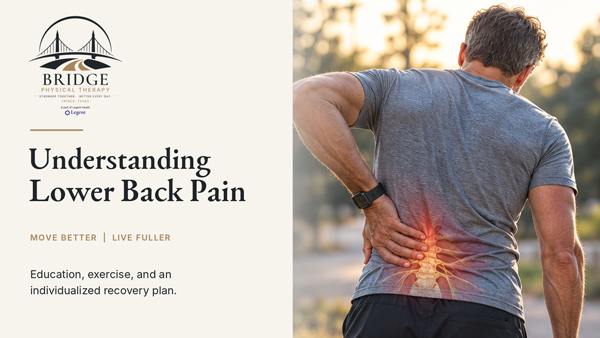
Low back pain is a symptom, not a single diagnosis. Muscles, joints, spinal discs, nerves, and surrounding tissues can all contribute. Pain may follow an injury or develop without an obvious cause. Sleep, stress, and reduced activity can influence recovery.
Common complaints include strains, stiffness after sitting, pain with lifting, and recurring flare-ups. Pain traveling into the buttock or leg may represent sciatica. Spinal stenosis and degenerative conditions can also require tailored care.
Importantly, pain does not automatically mean that your spine is damaged or unstable. Many people improve with conservative care, and treatment decisions should reflect symptoms and function rather than an imaging report alone.
Does Physical Therapy Actually Work for Back Pain?
For many patients, yes. The American Physical Therapy Association's 2021 low back pain clinical practice guideline recommends exercise-based interventions for chronic low back pain, including trunk strengthening, endurance training, general exercise, and aerobic activity. The guideline also supports tailoring treatment for certain patients with acute pain or leg symptoms.
A 2021 Cochrane systematic review found that exercise probably improves pain in people with chronic low back pain compared with no treatment, usual care, or placebo. Benefits vary, and improvements in physical function may be modest. That is why walking farther, sitting comfortably, and lifting with confidence matter as much as a pain score.
The World Health Organization's 2023 guidance likewise supports structured exercise and education as components of care for chronic primary low back pain. The lesson is not to prescribe one routine for everyone, but to select and progress movement appropriately.
What Happens During Back Pain Physical Therapy?
1. A Thorough Movement Evaluation
Your therapist begins with the history of your symptoms: where they occur, what aggravates or relieves them, whether pain travels down a leg, and which activities you want to reclaim. An evaluation may assess walking, balance, hip mobility, trunk control, strength, sensation, and movements such as bending or squatting. Findings help determine whether PT or further medical assessment is appropriate.
2. An Individualized Exercise Program
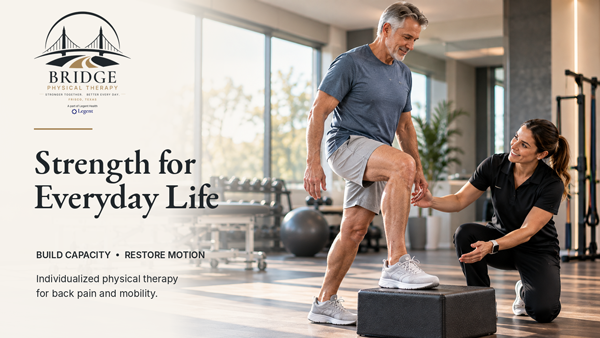
Treatment may include gentle mobility work, trunk endurance, hip and gluteal strengthening, graded walking, or resistance exercises. Some patients benefit from learning to control painful movements; others need greater conditioning and confidence. Exercise is matched to tolerance and progressed over time.
3. Hands-On Treatment When Appropriate
Some programs include joint mobilization or soft-tissue techniques to help patients move more comfortably. These can be useful adjuncts, but they should not replace an active rehabilitation plan. Durable progress depends on building the capacity to move outside the clinic, not becoming dependent on passive treatment.
4. Practical Coaching for Everyday Life
Your therapist may address lifting, getting into a car, desk work, returning to exercise, or walking. You will also learn how to adjust activity during a flare-up without abandoning movement altogether. A good program gives you tools you can continue using long after formal therapy ends.
Can Physical Therapy Help Sciatica or a Herniated Disc?
It often can, but the examination matters. Sciatica commonly describes pain radiating from the lower back or buttock into the leg; it may be associated with nerve irritation from a disc problem or other condition. A therapist may use symptom-guided movements, progressive exercise, and activity modification while monitoring weakness, numbness, and changes in function.
A herniated disc on an MRI does not automatically require surgery. However, progressive weakness, certain neurologic findings, or symptoms that fail to improve may warrant evaluation by a spine specialist. Physical therapy should be part of coordinated care, not a reason to delay needed assessment.
Do You Need an MRI Before Starting Physical Therapy?
Not necessarily. For uncomplicated low back pain without signs of serious disease, routine early imaging is generally not recommended. The NICE guideline for low back pain and sciatica advises against routinely offering imaging in nonspecialist settings and recommends considering it when findings are likely to change management.
Imaging can be important when a clinician suspects fracture, infection, cancer, significant neurologic compromise, or another specific disorder. History, examination, and symptoms guide when imaging is needed.
How Long Does Physical Therapy for Back Pain Take?
There is no universal timeline. A recent uncomplicated episode may improve quickly; persistent pain, nerve symptoms, or postoperative recovery may take longer. Progress should be measured and the plan adjusted, not tied to a promised visit count.
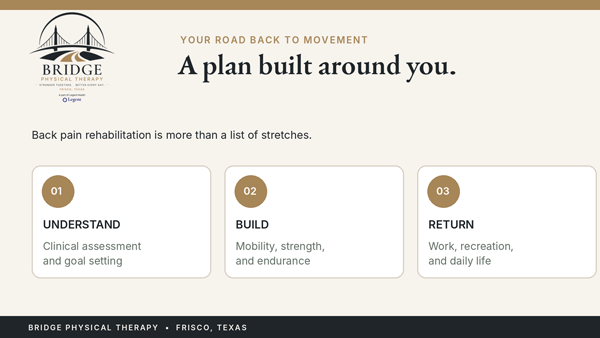
In the early phase, treatment often focuses on identifying tolerable movement and helping you resume ordinary activity. The middle phase emphasizes progressive strength, endurance, and movement confidence. Later sessions may concentrate on the particular demands of work, travel, golf, fitness, or family life. A home program helps bridge the time between visits.
Five Practical Ways to Support Your Recovery
Keep moving within your tolerance. Short, comfortable walks may be more useful than spending days in bed. Begin at a manageable level and build gradually.
Change positions regularly. If prolonged sitting increases discomfort, alternate sitting, standing, and brief movement breaks rather than searching for one perfect posture.
Train for real life. Your program should eventually prepare you to carry, climb, bend, walk, or exercise—not simply complete isolated motions on a treatment table.
Expect progress to be uneven. A sore day does not always mean you have caused harm. Look for trends in function and discuss concerning symptom changes with your therapist.
Follow the plan between appointments. Small, consistent efforts can be more sustainable than occasional intense workouts. The right amount should be individualized, especially if you have leg pain or recent surgery.
When Back Pain Needs Urgent Medical Attention
Seek emergency care for new loss of bladder or bowel control, inability to urinate, numbness around the groin or saddle area, or rapidly progressive leg weakness. These may indicate serious neurologic compression. Severe back pain following significant trauma also needs prompt assessment. Fever with severe back pain, a history of cancer with new concerning symptoms, or other signs of serious illness should prompt urgent medical evaluation.
Physical therapy is not a substitute for diagnosing these conditions. A safe rehabilitation program begins with identifying who should not start routine exercise before further evaluation.
Frequently Asked Questions About Back Pain Physical Therapy
Is walking good for lower back pain?
For many people, walking is an accessible way to maintain activity without heavy loading. Start with a distance and pace you can comfortably tolerate. If walking reliably worsens leg pain, numbness, or weakness, seek individualized guidance.
Should I stretch or strengthen my lower back?
Often, both mobility and strengthening have a role, but their relative importance depends on your examination. Aggressive stretching is not always helpful for irritated nerve symptoms. Your therapist can determine which movements are appropriate and when to progress them.
Can physical therapy help chronic back pain?
Yes. Exercise-based care is recommended in major clinical guidelines for chronic low back pain. Outcomes vary, and meaningful success may include improved endurance, fewer activity limitations, greater confidence, and better self-management—not necessarily complete elimination of every symptom.
Where can I find physical therapy for back pain near Plano, McKinney, or Allen?
Bridge Physical Therapy serves patients in Frisco and surrounding North Texas communities, including Plano, McKinney, and Allen. Your treatment plan should be based on the clinical problem and your personal goals, rather than a generic protocol. Contact the clinic to ask about scheduling, insurance benefits, and any referral requirements.
Back to Moving Well, Living Fully
You should not have to organize your entire life around your back. Whether your goal is a comfortable workday, a longer walk, the confidence to lift your grandchild, or a return to the golf course, improvement starts with understanding your symptoms and progressing deliberately.
At Bridge Physical Therapy, a part of Legent Health, in Frisco, Texas, we focus on personalized, evidence-informed rehabilitation that connects what happens in therapy to what matters outside it. Request a back pain physical therapy evaluation and take the next step toward moving with greater confidence.
This article is for general education and does not replace individualized medical evaluation. Treatment and exercise recommendations depend on your diagnosis, symptoms, and medical history.

Clinical References
- George SZ, Fritz JM, Silfies SP, et al. Interventions for the Management of Acute and Chronic Low Back Pain: Revision 2021. J Orthop Sports Phys Ther. 2021. https://doi.org/10.2519/jospt.2021.0304
- Hayden JA, Ellis J, Ogilvie R, et al. Exercise therapy for chronic low back pain. Cochrane Database Syst Rev. 2021. https://www.cochrane.org/evidence/CD009790_exercise-treatment-chronic-low-back-pain
- World Health Organization. WHO guideline for non-surgical management of chronic primary low back pain in adults. 2023. https://www.who.int/publications-detail-redirect/9789240081789
- National Institute for Health and Care Excellence. Low back pain and sciatica in over 16s: assessment and management (NG59). https://www.nice.org.uk/guidance/ng59/chapter/recommendations