
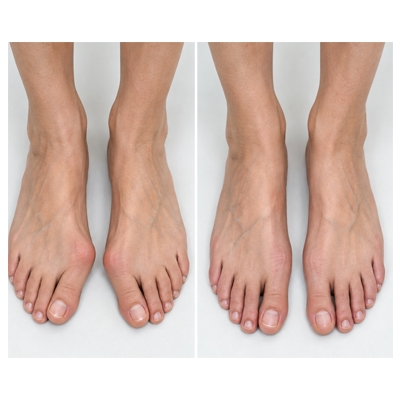
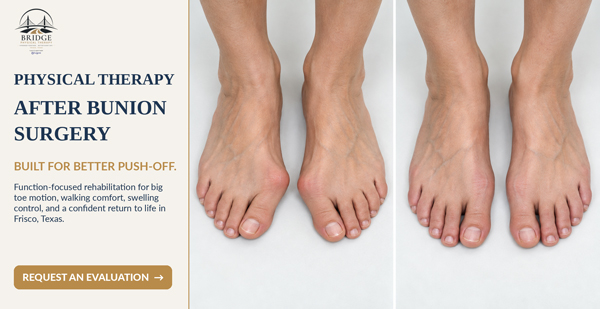
Bunion surgery recovery is about much more than how the foot looks in a sandal. At Bridge Physical Therapy in Frisco, Texas, the focus is function: helping the big toe move better, improving walking mechanics, calming pain, and getting patients back to daily life with better confidence. A bunion changes the alignment of the big toe, but it can also change how the entire front of the foot works. After surgery, many patients still need help with swelling, stiffness, weakness, altered push-off, and soreness under the ball of the foot.
That is where physical therapy matters. A structured rehabilitation plan can help the surgical correction translate into better real-world function. The big toe has to bend, the foot has to share load well, and the rest of the leg has to move efficiently. Patients in Frisco and across North Texas often assume bunion surgery is purely a cosmetic procedure. It is not. In fact, the American Academy of Orthopaedic Surgeons specifically notes that bunion surgery should not be done for cosmetic reasons. The main goals are pain relief, improved alignment, and better everyday function.
Function, Not Beauty: What Recovery Is Really About
The most useful way to think about rehab after bunion surgery is this: correct the shape, then train the function. Surgery may straighten the toe, but recovery still depends on how well the toe moves and how well the foot handles body weight when you stand, walk, climb stairs, and return to exercise.
For many patients, the biggest problems before surgery are not visual. They are practical. Shoes rub. The big toe does not push off well. Walking distances shrink. The smaller toes and the ball of the foot start doing work that should be shared by the big toe. That can create soreness under the front of the foot — what clinicians often call metatarsalgia. In patient-friendly language, that simply means pain under the ball of the foot.
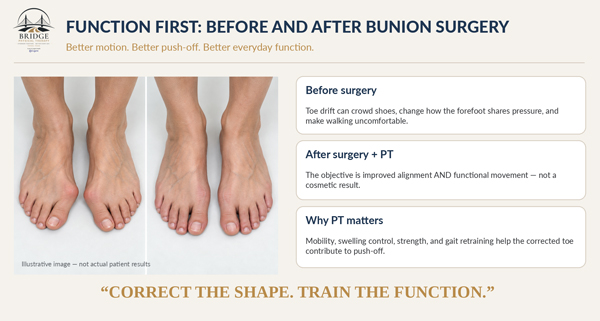
Physical therapy helps address the mechanical side of recovery. It is not about “perfect looking” feet. It is about helping the front of the foot load better, improving great-toe motion, and teaching the body to trust the corrected foot again.
Why Physical Therapy Matters After Bunion Surgery
The research on bunion-surgery rehabilitation is still developing, and that is important to say honestly. A 2025 systematic review found limited high-quality evidence overall, but it did identify postoperative strategies such as early weight bearing in appropriate cases and certain mechanical supports as potentially helpful. An earlier prospective study found that postoperative physical therapy and gait training were associated with improved first-ray weight bearing and improved first metatarsophalangeal joint motion over time.
In practical terms, this matches what many surgeons and therapists see clinically. Patients do better when they are guided through swelling control, joint mobility, gait retraining, progressive strengthening, and activity progression that matches the actual operation they had. Recovery is not one-size-fits-all. A distal osteotomy, an Akin correction, and a Lapidus procedure can come with different precautions and different timelines. Physical therapy should respect the surgeon’s instructions while still pushing the patient forward in a safe, evidence-informed way.
Big Toe Stiffness and Pain Under the Ball of the Foot
Two of the most common issues after bunion surgery are big toe stiffness and soreness under the front of the foot.
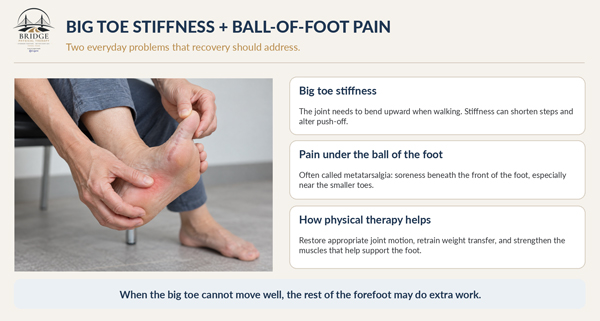
Big toe stiffness matters because the great toe needs to bend upward during walking. If that motion is limited, people often avoid rolling through the foot. They shorten the step, rotate around the outside of the foot, or shift pressure toward the lesser toes. Over time, that can create compensations up the chain.
Pain under the ball of the foot can show up when the forefoot is overloaded. Patients may describe it as tenderness under the smaller toes, discomfort barefoot on hard floors, or a feeling that they cannot “push through” the big toe. This is one reason a function-first rehab plan matters. If the big toe stays stiff or weak, the rest of the forefoot often pays the price.
PT can help by improving motion in the big toe joint, addressing scar and soft-tissue stiffness, guiding foot-intrinsic and calf strengthening, and retraining weight transfer during gait. In plain English, rehab helps the foot move and share pressure better.
What Physical Therapy Can Provide After Bunion Surgery
A good physical therapy program after bunion surgery usually includes several core elements.
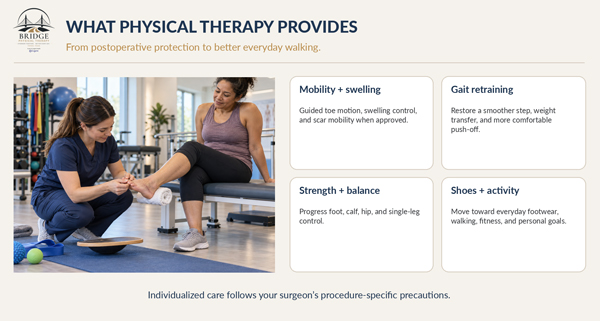
First, swelling control and mobility work. Especially early on, the foot may feel tight, puffy, and guarded. Elevation, compression strategies when appropriate, gentle range-of-motion work within surgical precautions, and scar mobility can all help.
Second, gait retraining. Many patients limp after surgery even when the incision is healing well. Sometimes the limp comes from pain. Sometimes it comes from habit. Sometimes it comes from a toe that does not want to bend. PT helps restore smoother weight transfer and a more normal push-off pattern.
Third, strength and balance. The foot does not work in isolation. Recovery usually includes ankle strength, calf strength, hip strength, intrinsic foot control, and single-leg balance. These pieces help patients feel stable again and reduce overload elsewhere.
Fourth, shoe and activity progression. Patients often need help transitioning from a postop shoe or boot into normal footwear. They may also need guidance for work demands, walking programs, gym return, or sport-specific goals.
Recovery Phases After Bunion Surgery
While the exact timeline depends on the procedure and the surgeon’s protocol, the recovery process often moves through a few recognizable phases.
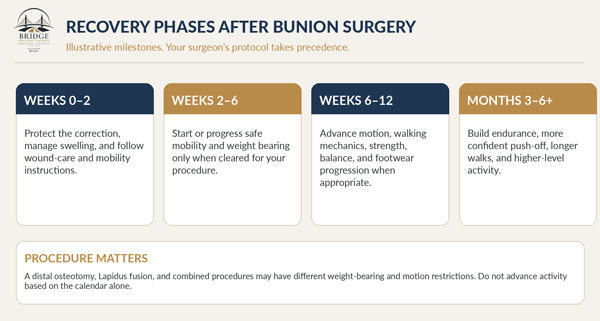
In the first couple of weeks, the priorities are protecting the correction, controlling swelling, and beginning only the range-of-motion work that is allowed. Many patients are still in protective footwear, and wound healing is a major focus.
From roughly weeks two through six, rehab often shifts toward improving mobility, calming persistent swelling, and restoring cleaner walking mechanics. Depending on the surgery, this is when progressive weight bearing and gait work become more important.
From around six to twelve weeks, many patients begin pushing farther into strength, balance, and endurance. Toe motion becomes especially important here. If the big toe remains stiff, walking mechanics may still feel awkward.
From three months onward, the focus often becomes higher-level function: longer walking tolerance, better confidence, improved step-through mechanics, and a return to recreational activity. Swelling can still linger for a while, which is normal for many patients.
How Long Until You Feel Better?
This is one of the most common questions patients ask in Frisco physical therapy clinics. The honest answer is that it depends on the surgery and the starting point. Most patients notice gradual improvement over the first several months, but full recovery may take longer than expected. Swelling can persist for months. Toe motion and shoe comfort often continue to improve with time.
The key is not just waiting. It is using that recovery window well. Good rehab helps patients move forward instead of simply hoping the foot will sort itself out.
Goals of Rehab
The goals after bunion surgery are straightforward but important: restore big toe motion, reduce swelling, improve walking comfort, reduce overload under the forefoot, rebuild strength, improve balance, and help the patient return to normal life.
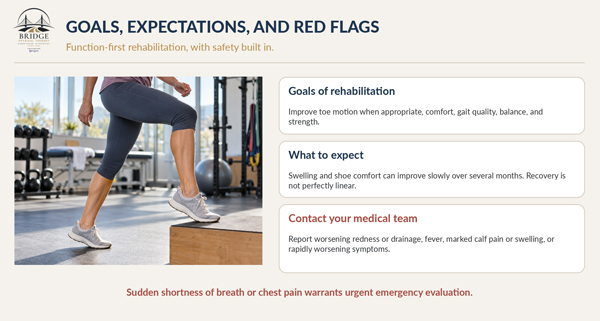
At Bridge Physical Therapy, those goals are personalized. For one patient, success may mean walking the neighborhood without limping. For another, it may mean returning to work comfortably in regular shoes. For another, it may mean getting back to exercise or travel with less soreness.
Red Flags and When to Call the Surgeon
Physical therapy is part of the solution, but patients also need to know when something is not following the expected course. Increasing redness, drainage, fever, severe calf pain, sudden shortness of breath, or pain that is rapidly worsening instead of gradually improving should prompt medical follow-up. PT should work alongside — not instead of — surgical follow-up.
Why Bridge Physical Therapy in Frisco, Texas?
Patients recovering from bunion surgery do not just need generic exercises. They need a plan that understands the surgery, the mechanics of the foot, and the goals of daily life. At Bridge Physical Therapy in Frisco, Texas, the emphasis is evidence-informed, function-focused care. That means helping patients regain motion, improve forefoot load sharing, retrain gait, and move from postoperative protection toward confident function.
For North Texas patients searching for physical therapy after bunion surgery, bunion rehab in Frisco, or help with big toe stiffness after surgery, the biggest message is simple: this recovery is not just about straightening the toe. It is about helping the foot work better.
Patient questions
Do I need physical therapy after bunion surgery?
Not every surgeon prescribes the exact same plan, but many patients benefit from PT to address stiffness, swelling, gait changes, weakness, and pain under the front of the foot.
Why is my big toe stiff after bunion surgery?
Some stiffness is common after surgery. Swelling, scar tissue, and temporary joint guarding can all contribute. Guided mobility work can help when done within the surgeon’s protocol.
What is metatarsalgia in plain English?
It means pain under the ball of the foot — usually under the front part of the foot near the smaller toes.
How long does it take to recover from bunion surgery?
Recovery varies by procedure. Many patients improve over several months, and swelling may linger longer. Your therapist should follow the surgeon’s weight-bearing and motion precautions.
Is bunion surgery rehab about cosmetics?
No. The goal is better function: less pain, better shoe tolerance, improved walking mechanics, and a more effective push-off through the big toe.
References
- American Academy of Orthopaedic Surgeons. Bunion Surgery. OrthoInfo.
- Gumuskaya O, Peterson B, Donnelly H, et al. Preoperative and Postoperative Physical and Mechanical Rehabilitation Interventions in Hallux Valgus: A Systematic Review. Journal of Foot and Ankle Research. 2025.
- Schuh R, et al. Rehabilitation after hallux valgus surgery: importance of physical therapy to restore weight bearing of the first ray during the stance phase. 2009.