
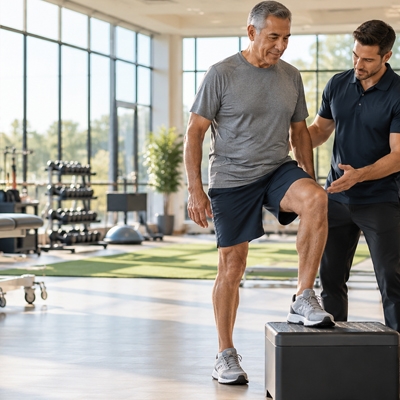
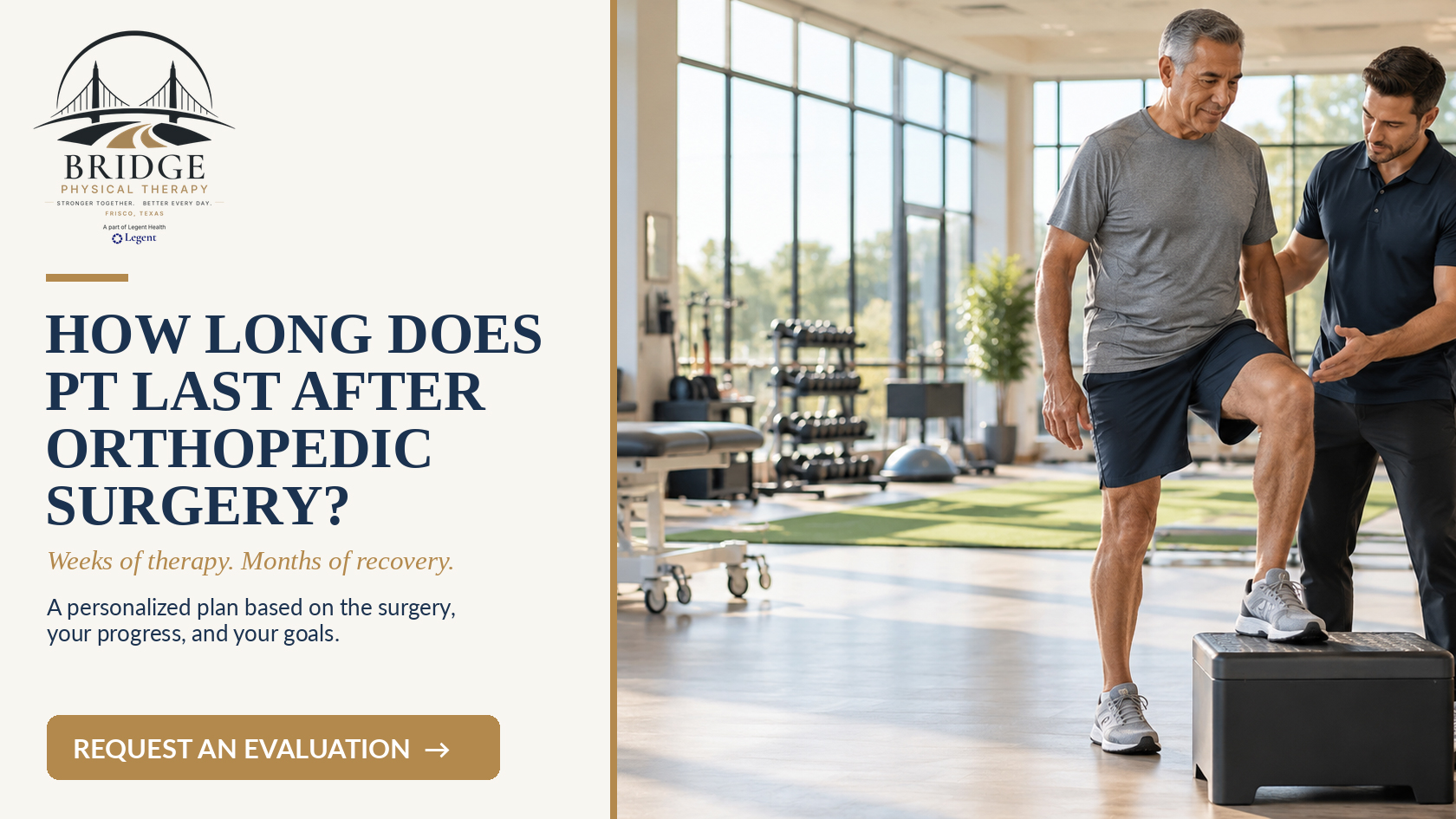
“How long will I need physical therapy?” is one of the most important questions patients ask after orthopedic surgery. The answer is rarely a single number. A person recovering from a small arthroscopic procedure may need only several supervised visits. Someone recovering from a tendon repair, complex ankle reconstruction, or ACL surgery may follow a structured rehabilitation plan for months. Even after formal appointments end, strength and confidence can continue to improve.
At Bridge Physical Therapy in Frisco, Texas, the goal is not to keep you attending therapy for an arbitrary number of weeks. It is to make each visit purposeful, match the program to your surgeon’s precautions, and give you the tools to return to the activities that matter most. Some patients need close supervision early. Others progress rapidly toward a home program. Both can represent excellent care.
The most useful distinction is between how long you attend supervised PT, how long biological healing takes, and when you return to your desired level of activity. Those three milestones are related—but they are not interchangeable.
Why PT duration varies after orthopedic surgery
Postoperative rehabilitation depends first on what was repaired or reconstructed. A joint replacement usually allows early movement, while a tendon repair may require a protected period to avoid excessive loading. Complex fractures, nerve symptoms, revisions, and multiple procedures can change the plan further. The same operation can lead to different PT schedules in different patients because tissue quality, medical history, preoperative fitness, swelling, and goals vary.
A second factor is what you are trying to get back to. Walking around the house independently is not the same endpoint as climbing a work ladder, returning to competitive soccer, or running a half marathon. Someone who wants comfortable daily activity may leave supervised therapy earlier than an athlete pursuing cutting, pivoting, and explosive movements.
Finally, PT is not simply the passage of time. Therapists assess pain, swelling, range of motion, strength, balance, gait, functional testing, and the quality of movement. Progress should guide the next stage, not an automatic extension of visits.
The four phases of postoperative physical therapy
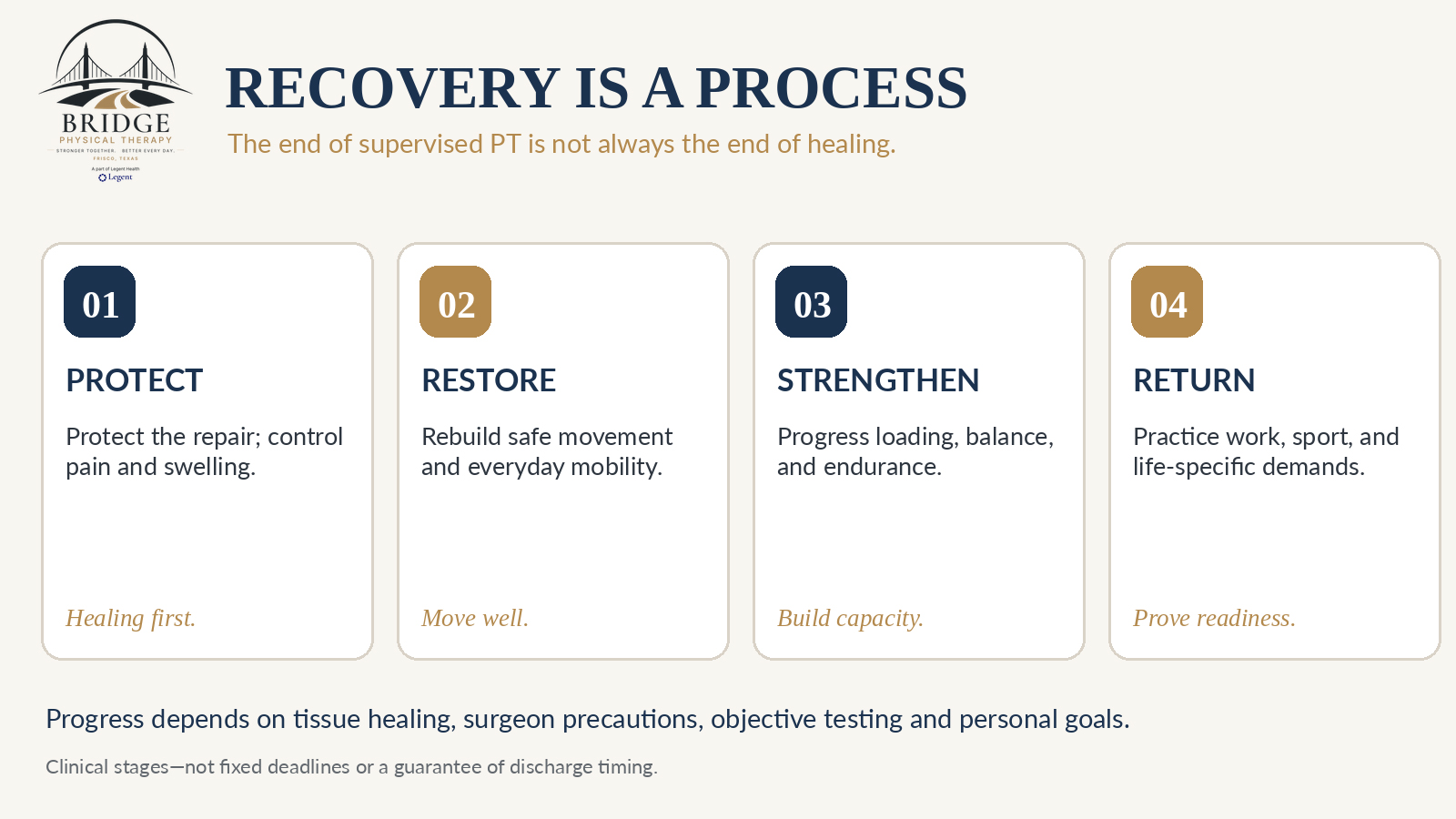
Phase 1 — Protect and settle symptoms. The early focus is respecting the surgical repair, protecting wounds, managing swelling, restoring permitted movement, and learning safe transfers or walking with assistive devices. This phase looks different after an ankle fusion than after an uncomplicated knee replacement.
Phase 2 — Restore basic movement. As the surgeon permits, rehabilitation addresses stiffness, walking mechanics, joint motion, light strengthening, and confidence with everyday activities. Patients may begin to reduce reliance on crutches, a boot, or other supports.
Phase 3 — Build strength and capacity. More demanding resistance exercise, balance work, endurance training, and functional tasks become central. The therapist helps distinguish normal muscular work from signs of irritation or overload.
Phase 4 — Return to life, work, and sport. Higher-level rehabilitation targets the actual demands of a patient’s life: walking on uneven ground, carrying groceries, lifting, returning to a physical job, or performing running and jumping drills. This phase may continue through an independent program after in-clinic visits stop.
Typical PT timelines after common orthopedic procedures
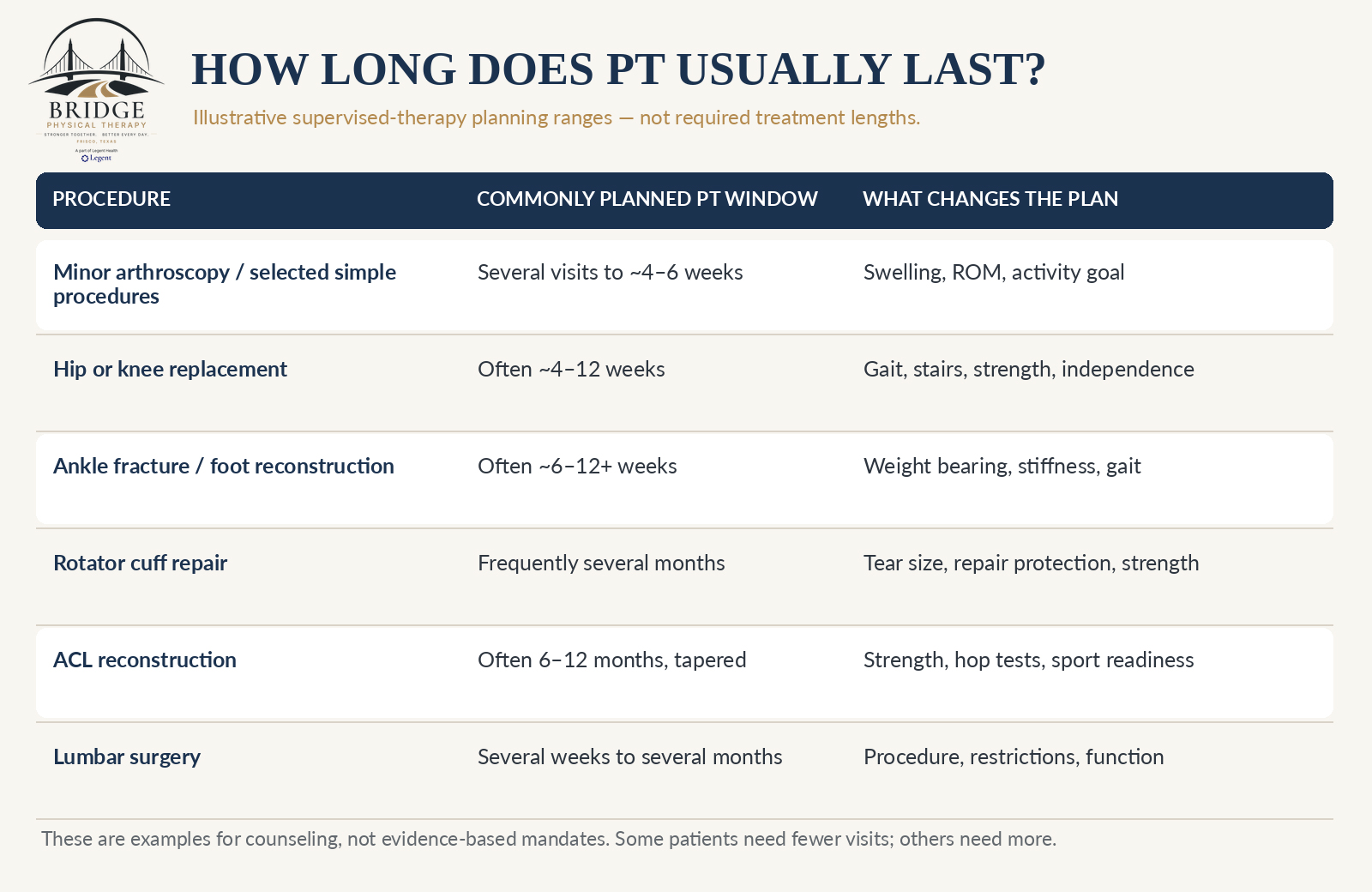
The following are general clinical planning examples, not fixed protocols or guaranteed treatment durations. Your surgeon’s procedure-specific restrictions and your therapist’s objective examination take priority. Some patients need substantially less supervised PT; others need more.
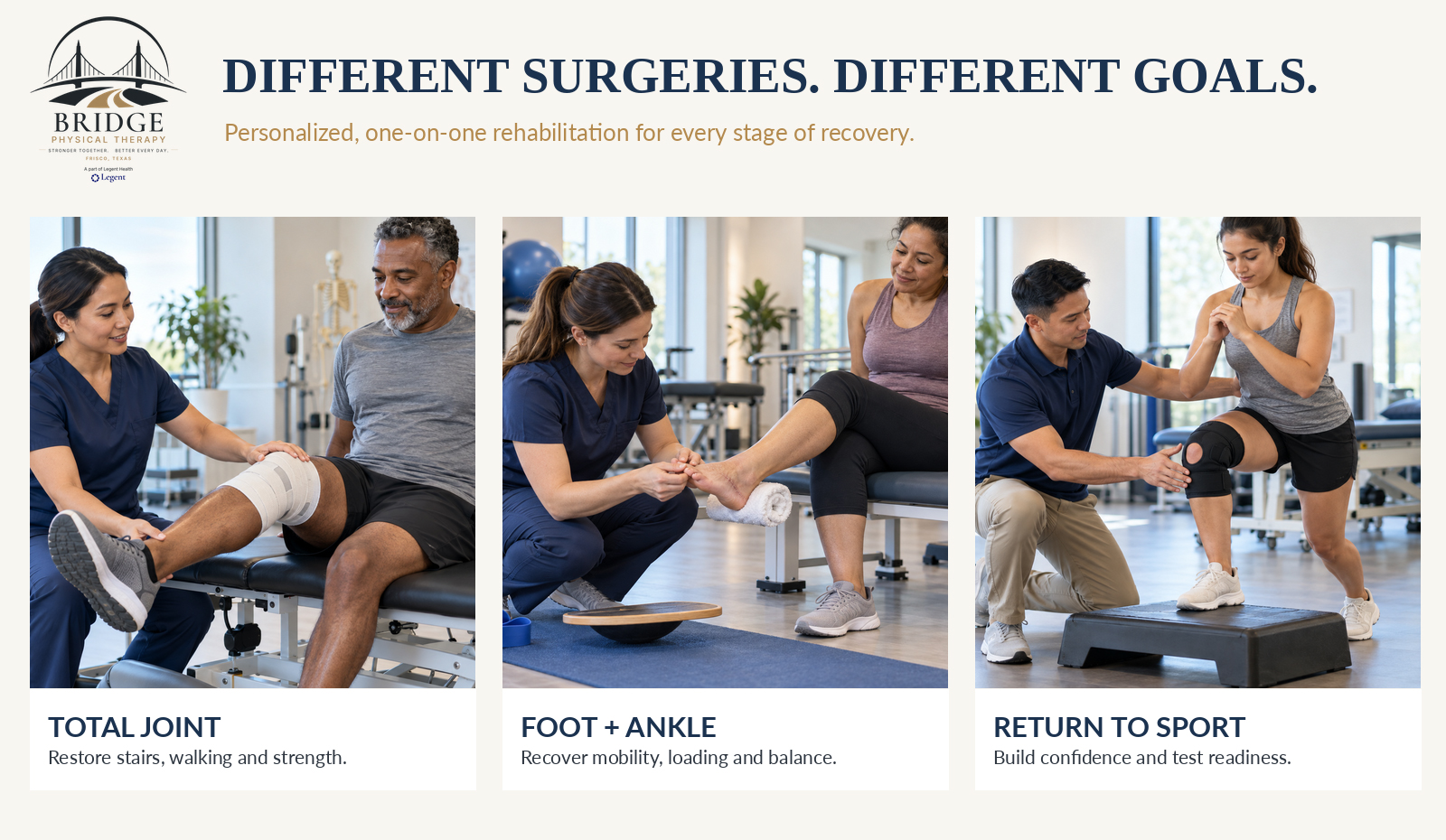
Hip and knee replacement. Many patients participate in supervised PT over approximately four to twelve weeks, sometimes with home or outpatient visits starting soon after surgery. The focus is walking, knee or hip movement, leg strength, balance, stairs, and independence. Persistent weakness may warrant continued exercise after discharge. Evidence in selected uncomplicated total knee replacement populations has found that structured home-based rehabilitation can produce outcomes comparable to more intensive facility-based approaches—so the amount of supervision should be individualized rather than assumed to be better simply because there are more visits. [1, 2]
Ankle fracture surgery and foot reconstruction. Many patients undergo roughly six to twelve weeks or more of supervised rehabilitation once treatment is permitted, although timing varies widely. Swelling, stiffness, weight-bearing restrictions, and altered walking mechanics often determine the course. Research supports appropriately selected early weight-bearing after ankle fracture fixation, but this cannot be generalized to every fracture pattern or reconstruction. [3]
Rotator cuff repair. Physical therapy commonly unfolds over several months, with earlier emphasis on protecting the repair and carefully restoring motion before strengthening. Large tears, poor tissue quality, associated procedures, and surgeon preference can change timing. Trials comparing early and delayed mobilization have found modest early motion advantages with some earlier programs, without a consistent long-term functional advantage; protocols remain individualized. [4]
ACL reconstruction. Rehabilitation commonly extends for six to twelve months, although weekly supervised visits may taper as independence grows. Early recovery focuses on motion, swelling, and quadriceps activation. Later work includes progressive strength, running, jumping, agility, and objective return-to-sport testing. Returning to pivoting sport is a separate decision from simply finishing outpatient PT. Consensus guidance favors criteria-based progression; time alone is not enough. [5, 6]
Achilles tendon repair. Protected loading, calf-strength recovery, and gait normalization may require several months of structured rehabilitation. Return to higher-demand sport can take considerably longer. Rehabilitation must respect tendon healing and surgeon-specific restrictions; patients should not rush dorsiflexion stretching or plyometrics simply because they feel better. Research on Achilles rupture reinforces that recovery is measured over months, with meaningful variation at one year. [7]
Lumbar microdiscectomy or fusion. Some patients need only selected sessions focused on education, movement confidence, walking, and progressive exercise, while others benefit from longer supervised care. Fusion usually imposes more substantial surgical precautions than a straightforward decompression. A systematic review suggests supervised exercise may improve short-term pain or disability for some lumbar-disc surgery patients, but the evidence is heterogeneous and does not support a single mandatory treatment duration. [8]
Does PT always need to be two or three times per week?
No. Some patients benefit from more frequent visits during a challenging early period. Others progress with one-on-one check-ins and a well-designed home program. As strength, movement quality, and independence improve, appointments can often be reduced without abandoning the rehabilitation plan.
The right schedule also depends on whether a patient can perform exercises accurately and safely between visits. Home exercise is part of treatment, not a substitute for evaluation, progression, or communication. A thoughtful plan explains what to do, how hard to work, when to progress, and what warning signs should prompt reassessment.
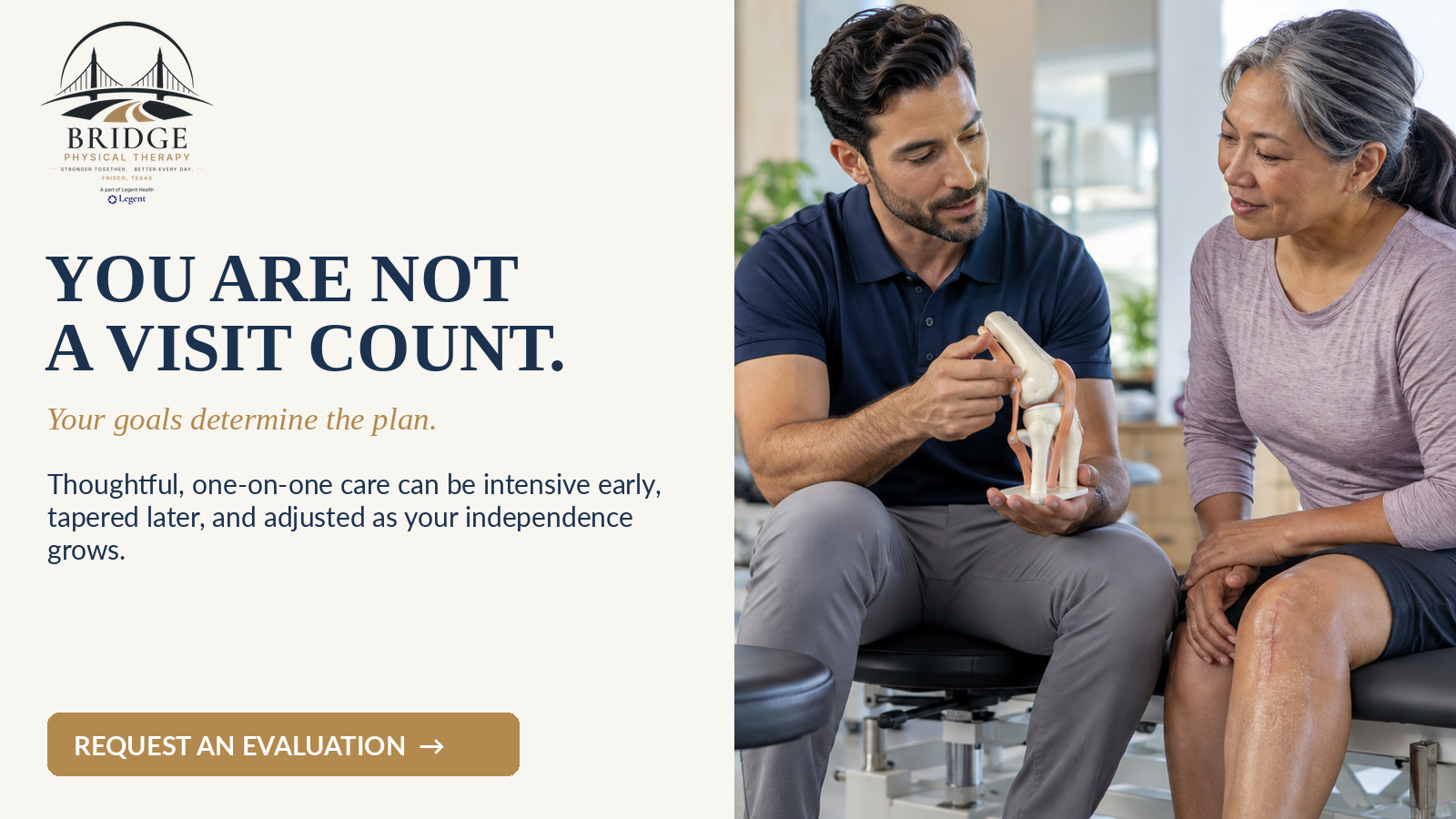
At Bridge, the plan should be built around your needs—not a generic visit count. Patients should understand why a particular frequency is recommended, what is being measured, and when the schedule may change.
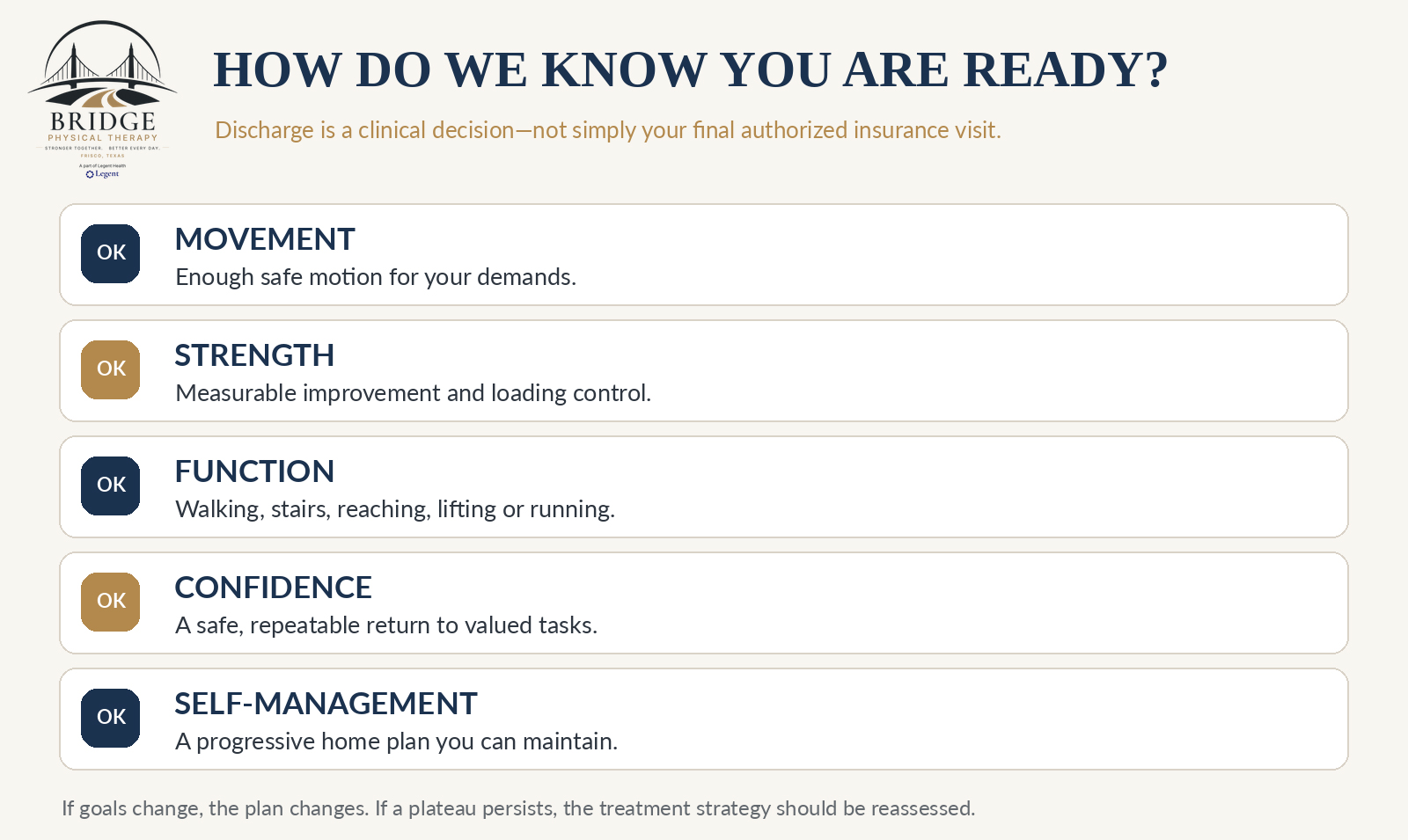
How do you know when you are ready to stop supervised PT?
Being pain-free is helpful, but it is rarely the entire discharge decision. The central question is whether you can safely and confidently meet your functional goals with a program you can manage independently.
Your therapist may examine motion, side-to-side strength, walking speed and quality, balance, stair performance, lifting tolerance, endurance, or procedure-specific tests. For athletes, objective strength and hop performance may be part of return-to-sport readiness, alongside surgeon clearance and clinical judgment. [5, 6]
A good discharge plan includes clear exercise progressions, guidance for returning to higher activity, and instructions about when to seek reassessment. If progress stalls, the solution is not automatically more visits; it may be a change in loading, a different treatment strategy, or communication with the surgeon.
What can make your rehabilitation take longer?
Several common challenges can delay progress: prolonged swelling, postoperative stiffness, sleep disruption, difficulty following restrictions, inadequate strength, fear of movement, or trying to do too much too quickly. Revision surgery, multiple procedures, infection, delayed healing, significant nerve involvement, or major preoperative deconditioning may also require a longer or more closely coordinated pathway.
Longer PT is not a failure. Neither is a shorter course. The meaningful question is whether the plan is helping you reach measurable, personally relevant milestones safely.
Why individualized care matters at Bridge Physical Therapy
Bridge Physical Therapy is designed for patients who want attentive, one-on-one rehabilitation and a plan that reflects the details of their surgery. We focus on the whole person: what was done, what can safely be loaded, which movements remain limited, and what returning to normal actually means for that patient.
For one patient, success is walking the dog without a limp. For another, it is returning to golf, lifting a grandchild, or passing functional tests before a sport season. This attention to individual goals is what gives therapy a useful beginning, a purposeful middle, and an appropriate end.
We coordinate rehabilitation with the operative plan and aim to make progress understandable. Patients should know which milestones they have achieved, which remain ahead, and what they can safely work on between visits. The aim is not an endless schedule. It is a stronger, more confident return to life.
Frequently asked questions
How many weeks of PT do you need after surgery?
There is no standard number for all operations. Some procedures need a few visits; others benefit from weeks or months of structured care. The type of surgery, healing precautions, strength, mobility, and goals determine the plan.
Is six weeks of physical therapy enough?
It may be enough for some patients, but six weeks is not a universal endpoint. Someone may walk comfortably yet still lack the strength or balance needed for work or sport. Your therapist should reassess objective progress before discharge.
How long is PT after knee or hip replacement?
Many programs involve several weeks to a few months of supervised rehabilitation, with continued home exercise afterward. Uncomplicated patients may need fewer supervised visits, while those with persistent limitations may benefit from more.
How long is PT after rotator cuff surgery?
It commonly extends over several months because tendon protection, motion restoration, and strengthening occur in stages. Your tear size, repair quality, associated procedures, and surgeon protocol govern progression.
How long does physical therapy last after ACL surgery?
A complete rehabilitation pathway often spans six to twelve months, but formal clinic visits can taper over that time. Return to pivoting sports requires more than finishing therapy; strength and function should be tested before clearance.
Can I stop PT once I feel better?
Improved pain is encouraging, but pain relief alone may not mean mobility, strength, or movement control have returned. Discuss discharge goals with your therapist and surgeon before stopping treatment.
Will I need to do exercises after PT ends?
Usually, yes. A progressive home program helps maintain gains and continue recovery. Your therapist should explain which exercises to keep, which to advance, and when to seek reassessment.
Will my insurance determine how long I receive PT?
Insurance may affect coverage or authorization, but it does not replace clinical judgment. Your therapist can explain documented goals, medical necessity, authorized visits, and available options without equating the end of coverage with full recovery.
The bottom line: a plan built around your progress
There is no single number of weeks that makes postoperative PT complete. The best plan respects surgical healing, measures meaningful progress, and transitions you toward independence at the right time. You may spend weeks in supervised visits and continue improving for months afterward.
At Bridge Physical Therapy in Frisco, Texas, we focus on purposeful one-on-one care, clear milestones, and rehabilitation tailored to your goals. If you are preparing for orthopedic surgery or deciding what recovery should look like, request an evaluation and let us build a plan that makes sense for your next step.
References and editorial evidence
[1] APTA. Physical Therapist Management of Total Knee Arthroplasty: Revision 2026. Clinical Practice Guideline. July 27, 2026. https://www.apta.org/patient-care/evidence-based-practice-resources/cpgs/physical-therapist-management-of-total-knee-arthroplasty
[2] Buhagiar MA, et al. Effect of inpatient rehabilitation vs a monitored home-based program after total knee arthroplasty: HIHO randomized clinical trial. JAMA. 2017;317:1037–1046. DOI:10.1001/jama.2017.1224. https://jamanetwork.com/journals/jama/fullarticle/2610335
[3] Bretherton CP, et al. Early versus delayed weight-bearing following operatively treated ankle fracture (WAX). Lancet. 2024;403:2787–2797. DOI:10.1016/S0140-6736(24)00710-4. PMID:38848738. https://pubmed.ncbi.nlm.nih.gov/38848738/
[4] Mazuquin B, et al. Effectiveness of early versus delayed rehabilitation following rotator cuff repair: systematic review and meta-analyses. PLoS One. 2021;16:e0252137. DOI:10.1371/journal.pone.0252137. PMID:34048450. https://pubmed.ncbi.nlm.nih.gov/34048450/
[5] Kotsifaki R, et al. Aspetar clinical practice guideline on rehabilitation after ACL reconstruction. Br J Sports Med. 2023. https://bjsm.bmj.com/content/early/2023/02/20/bjsports-2022-106158
[6] Grindem H, et al. Simple decision rules can reduce reinjury risk after ACL reconstruction: Delaware-Oslo cohort. Br J Sports Med. 2016;50:804–808. DOI:10.1136/bjsports-2016-096031. PMID:27162233. https://pubmed.ncbi.nlm.nih.gov/27162233/
[7] Myhrvold SB, et al. Nonoperative or surgical treatment of acute Achilles tendon rupture. N Engl J Med. 2022;386:1409–1420. DOI:10.1056/NEJMoa2108447. PMID:35417636. https://pubmed.ncbi.nlm.nih.gov/35417636/
[8] Rehabilitation after lumbar spine surgery in adults: systematic review with meta-analysis. Arch Physiother. 2023. DOI:10.1186/s40945-023-00175-4. https://pmc.ncbi.nlm.nih.gov/articles/PMC10578022/
[9] Assessment of outcomes of inpatient or clinic-based vs home-based rehabilitation after total knee arthroplasty: systematic review and meta-analysis. JAMA Netw Open. 2019;2:e192810. DOI:10.1001/jamanetworkopen.2019.2810. https://jamanetwork.com/journals/jamanetworkopen/fullarticle/2731681
Medical disclaimer: Educational information only. Rehabilitation progression must follow the treating surgeon’s instructions and the patient’s clinical needs. These time frames are illustrative examples, not guaranteed outcomes.